
Oplus_131072
JAKARTA, bhayaksa.net – Unfair and discriminatory public services, alongside allegations of abuse of power by Civil Servants (ASN), remain a major challenge for implementing clean bureaucracy in Indonesia. In response to these persistent issues, the public is strongly urged not to stay silent and to boldly report any form of malpractice occurring in government or civil administration affairs.
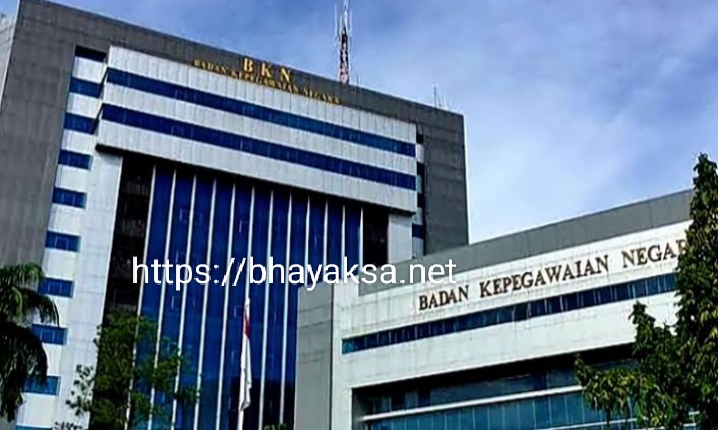
Based on official internal statements from the National Civil Service Agency (BKN) of the Republic of Indonesia obtained directly by bhayaksa.net reporters during a live coverage on Monday, September 14, 2026, citizens who find concrete evidence of disciplinary violations or arbitrary actions by ASN officials can lodge an official complaint with the BKN. Reports can be submitted directly through the official civil service email or via integrated national apparatus management channels.
“If the public uncovers evidence of malpractice, maladministration, or abuse of power by ASN officials, gather complete evidence such as supporting documents or screenshots, and submit your report,” an internal BKN representative strictly stated to bhayaksa.net in Jakarta. This decisive step is considered highly crucial so that rogue officials who tarnish the image of public service can be disciplined according to the prevailing laws and regulations.
Legal Framework and Authority of the BKN
BKN internal sources emphasized to bhayaksa.net that as the state institution responsible for overseeing and developing the bureaucracy, BKN possesses a solid legal foundation to receive and follow up on public complaints:
- Supervision and Control Function (Wasdal): Pursuant to Presidential Regulation (Perpres) Number 92 of 2024 concerning the National Civil Service Agency, BKN holds full authority over the supervision and control of the implementation of Norms, Standards, Procedures, and Criteria (NSPK) for ASN Management. Any arbitrary actions by ASN officials that complicate or deliver unfair public services are classified as breaches of discipline and codes of conduct.
- Disciplinary Enforcement Authority: In accordance with Government Regulation (PP) Number 94 of 2021 concerning Civil Servant Discipline, BKN is fully authorized to process public reports, investigate evidence of malpractice, and issue or recommend disciplinary sanctions (ranging from written warnings and demotions to dishonorable dismissal) to the Personnel Directing Officer (PPK) of the respective institution where the rogue official is employed.
- Official BKN Complaint Channels: The public can directly utilize civil service complaint and consultation services via the official handling email or through the integrated national public service complaint portal on the SP4N-LAPOR! website, which links directly to BKN’s internal enforcement system.
Step-by-Step Procedure for Filing a Complaint with the BKN
To ensure your report is legally valid, satisfies statutory requirements, and is immediately processed by BKN’s Supervision and Control (Wasdal) team, citizens must follow this official procedure:
Step 1: Evidence Preparation Stage (Most Crucial)
Before sending the report, compile the complaint document to satisfy the 4W + 1H criteria (Who the official is, What the violation is, When it occurred, Where it happened, and How the chronology unfolded).
- ASN Official’s Data: Note down the official’s Name, NIP (Employee ID Number, if known), Position, and the Institution/Working Unit where they are stationed (e.g., Population and Civil Registry Office of X Regency).
- Physical/Digital Evidence: Prepare supporting documents such as screenshots of chat logs, copies of intentionally delayed administration papers, photos, videos, or audio recordings taken when the malpractice occurred.
Step 2: Selecting an Official BKN Complaint Channel
Citizens can file their reports through the primary channels integrated directly into the BKN ecosystem:
- Via Official BKN Email (Electronic Mail):
- For CASN (CPNS/PPPK applicants) Complaints/Consultations: Send to helpdesk.casn@bkn.go.id
- For General Civil Service Complaints (Mutations, Services, Performance): Send to persuratan@bkn.go.id or via the internal system at support-siasn.bkn.go.id
- Via the SP4N-LAPOR! National System:
- Visit the official website at lapor.go.id.
- Select the “Complaint” category, type a clear report title, and write down the detailed chronology of the incident.
- In the “Destination Institution” column, search and select “Badan Kepegawaian Negara (BKN)”.
- Upload all your compiled supporting evidence and choose the anonymous/confidential option if you have concerns regarding personal data privacy.
Step 3: Verification and Review Process by BKN
Once the report is successfully submitted, BKN through the Deputy for Supervision and Control will carry out:
- Administrative Verification: Checking the completeness of the reporter’s identity and the clarity of the reported official’s data.
- Comprehensive Analysis: Evaluation of whether the report meets the criteria of an ASN disciplinary violation based on PP Number 94 of 2021. If the evidence is insufficient, the reporter will be prompted to revise it.
Step 4: Investigation and Examination Stage
- If the report is declared valid, BKN will form an investigative team or directly coordinate with the Regional/Central Inspectorate overseeing the rogue official.
- BKN will summon the Personnel Directing Officer (PPK) of the related institution to conduct an internal examination and demand a formal clarification from the official involved.
Step 5: Execution of Disciplinary Sanctions
Based on the investigation results, BKN holds full authority to:
- Issue binding recommendations for disciplinary sanctions to the institution’s PPK.
- If the regional or central PPK fails to follow up on the recommended penalty, BKN has the power to Block the Civil Service Data (SAPK/SIASN) of the rogue ASN or the entire institution at the central system level until the disciplinary action is fully executed.
Through this reinforcement of transparency and official complaint channels, the public is encouraged to proactively monitor the performance of state apparatuses to build a clean, fair, and professional public service for all Indonesian citizens.
Reporter: Timothy
Editor: bhayaksa.net Team