
oplus_0
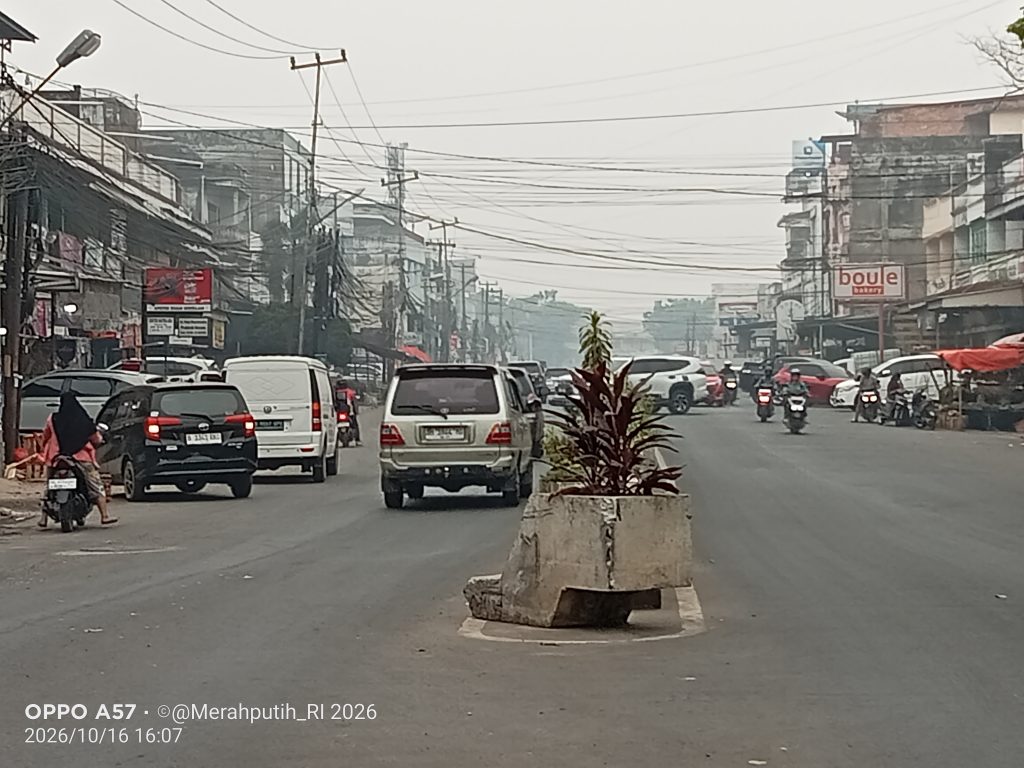
JAMBI, bhayaksa.net—- The extreme smog crisis triggered by persistent peatland fires in Jambi Province has reached a critical stage. On Friday, October 16, 2026, air pollution levels in Jambi City skyrocketed into the Hazardous category. Legal authorities and the local government have moved swiftly to streamline mitigation efforts through legally binding emergency status declarations.
According to statutory and technical data from the Jambi Paal Lima Air Pollution Standard Index (ISPU) monitoring station on October 16, 2026, the critical pollutant parameter PM2.5 registered at 410, crossing the absolute threshold for environmental health safety (>300 is categorized as Hazardous). To monitor real-time pollutant fluctuations across the region, citizens can access official updates via the portal of the Ministry of Environment and Forestry (KLHK). Meanwhile, the surrounding buffer zone in Berbak District, East Tanjung Jabung Regency, recorded an ISPU score of 331 due to its direct proximity to the subterranean fire epicenter within the Berbak Sembilang National Park (TNBS).
Timeline and Legal Framework of the Disaster
The Jambi Provincial Government, in coordination with the Karhutla Task Force, had previously established the operational legal basis by declaring a State of Emergency for Forest Fires and Smog, effective from April 27 through November 2026, to anticipate the prolonged dry season.
The escalating fires in late August prompted the Mayor of Jambi to issue an official circular shifting all conventional school activities to remote learning for public safety. By mid-October, ground suppression efforts faced massive hurdles due to dry peatland characteristics that keep fires smoldering deep underground. Accumulative data from the Regional Disaster Management Agency (BPBD) shows that the total burned area in Jambi Province has exceeded 4,300 hectares. The latest hotspot distributions and wind direction forecasts can be monitored live by the public through the portal of the BMKG Sultan Thaha Jambi Meteorological Station.
Public Health Impact and Transportation Disruptions
This extreme scale of air pollution has directly caused a massive surge in clinical medical cases. The Department of Health has verified thousands of smoke-related illnesses, with the vast majority of patients diagnosed with Acute Respiratory Infections (ISPA), followed by gastrointestinal distress, and acute eye inflammation (conjunctivitis).
In the transportation sector, the thick smog has severely disrupted flight operations due to critically low visibility. For passengers looking to verify domestic flight delays or cancellations, real-time schedule statuses can be accessed directly on the portal of the Sultan Thaha Jambi Airport Authority.
Official Responses from Local Government and Police
As part of public labor protection accountability, the Jambi City Government has legally enacted a workplace discretion allowing vulnerable worker groups—including pregnant civil servants (ASN) and individuals with chronic respiratory illnesses—to Work From Home (WFH). Furthermore, all public health centers (Puskesmas) in Jambi City have been officially mandated to provide emergency medical care and free oxygen supplies to affected residents. Detailed healthcare guidelines can be accessed via the web portal of the Jambi Province Health Department.
Simultaneously, the Jambi City Police through the Traffic Unit have deployed personnel across critical points of the Trans-Sumatran highway. Officers are enforcing strict speed limit monitoring to prevent traffic accidents caused by zero-visibility conditions, while distributing high-filtration masks to drivers free of charge.
The Disaster Task Force legally advises the public to adhere to all health protocols, seal all home ventilation points, and mandatorily wear high-particulate protection masks (minimum N95 standard) whenever outdoors.
Reporter: Harvery
Editor: bhayaksa.net Team.