

Oplus_131072
JAKARTA, bhayaksa.net—-Health expert and clinical nutritionist from the University of Indonesia, Dr. dr. Samuel Oetoro, M.S., Sp.G.K.(K), is urging the public to protect their health by managing their daily diet to prevent gout arthritis. This critical advice was delivered during a national health education seminar held at the IDI (Indonesian Medical Association) Building in Central Jakarta on Saturday (10/10/2026).
According to Dr. Samuel, the buildup of painful uric acid crystals in the joints is triggered by high purine levels in the body. This trend is rising because many individuals make poor dietary choices due to a lack of awareness and modern lifestyle habits.
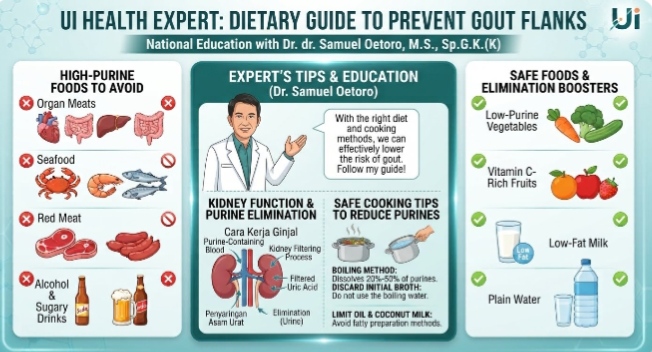
“Gout is no longer just a disease affecting the elderly. Many people of productive age are suffering from it because they frequently consume high-purine foods like organ meats, seafood, excessive red meat, and sugary drinks packed with high-fructose corn syrup,” Dr. Samuel stated during his presentation this morning.
To put this simply, purines are natural substances that serve as essential building blocks for our body’s cells. Once the body finishes processing purines, the metabolic waste left behind turns into a byproduct called uric acid.
How the Kidneys Filter Purines
Under normal conditions, the human body relies on an automatic waste disposal system, with the kidneys acting as the primary filter:
- Blood Filtration: Blood containing uric acid enters the nephrons (the microscopic filtering units within the kidneys). Daily, the kidneys filter out roughly 70% of the total uric acid dissolved in the bloodstream.
- Reabsorption: Essential nutrients are reabsorbed into the bloodstream, while a minor fraction of uric acid is recycled back to satisfy the body’s internal balance.
- Final Elimination: The remaining uric acid that is not reabsorbed gets directed to the bladder and is eliminated from the body through urine.
When the consumption of high-purine foods becomes excessive or kidney function declines, the kidneys get overwhelmed. Consequently, the excess waste builds up in the joints, crystallizing into sharp shards that trigger severe inflammation.
1. High-Purine Foods to Stay Away From
The public is highly advised to limit or completely avoid food groups with high purine content (exceeding 150 mg of purine per 100 grams of food):
- Organ Meats: Liver, gizzards, kidneys, brains, tripe, and intestines.
- Red & Processed Meats: Duck, lamb/mutton, fatty beef, sausages, and corned beef.
- Seafood: Shellfish, crabs, shrimp, squid, as well as specific fish like sardines, mackerel, anchovies, and tuna.
- Meat Extracts & Gravies: Concentrated broth bases, instant bouillon cubes, and heavy coconut milk stews reheated multiple times.
- Alcohol & Sugary Drinks: Beer, traditional liquor, and beverages sweetened with high-fructose corn syrup (soda and packaged juices), which cause the body to generate uric acid at an accelerated rate.
2. Smart Cooking Tips to Reduce Purine Levels
Dr. Samuel shared practical kitchen techniques to make everyday meals much safer to eat:
- The Boiling Method: Boiling meat or vegetables in water has been scientifically proven to dissolve and slash purine concentrations by 20% to 50%.
- Discard the First Boil: When preparing chicken or fish, always throw out the initial boiling water. The dissolved purines accumulate directly in that initial broth, so you should avoid consuming it.
- Avoid Grilling and Roasting: Cooking with dry, high-heat methods like grilling or roasting can actually concentrate and intensify the density of purines within the food.
- Limit Cooking Oil and Coconut Milk: Avoid deep-frying foods or using thick coconut milk sauces. High amounts of saturated fat can hinder the kidneys’ ability to flush uric acid out of the system.
3. Sample Gout-Safe Daily Meal Plan
This structured daily meal plan concentrates on low-purine ingredients, high fluid intake, and rich antioxidants to facilitate the elimination of metabolic waste:
- Breakfast: Oatmeal topped with fresh sliced strawberries, paired with 1 glass of low-fat milk. The dietary fiber in oatmeal helps manage body weight, while the vitamin C in strawberries speeds up the excretion of uric acid through urine.
- Lunch: Brown rice, steamed/wrapped fish or chicken (without skin), served with a side of sautéed carrots and green beans cooked in a dash of olive oil. This menu supplies healthy lean proteins that are perfectly safe for joint health.
- Afternoon Snack: Fresh oranges, apples, or a glass of pure tart cherry juice with no added sugar. Tart cherries are clinically proven to contain active compounds that significantly reduce the risk of painful gout flare-ups.
- Dinner: A warm, clear vegetable soup containing potatoes, boiled eggs, and soft white tofu. This light, hydrating meal is highly safe to consume right before bedtime.
Important Note: Always maintain a daily intake of 2 to 2.5 liters of plain water (8 to 10 glasses) to support smooth kidney filtration.
4. Early Symptoms of a Gout Attack to Watch For
A gout attack (gout flare) typically hits unexpectedly, particularly during the night or early morning hours. Keep an eye out for these early warning signs:
- Intense Pain in a Single Joint: It most frequently strikes the base of the big toe (podagra), ankles, or knees, bringing an excruciating burning or stabbing sensation.
- Swelling and Inflammation: The affected joint will appear noticeably enlarged, the overlying skin will turn red or purple, and it will look tight and shiny.
- Heat Sensation upon Touch: If you gently feel the skin around the painful joint, the temperature will feel substantially warmer or hotter compared to the rest of your body.
- Complete Stiffness and Limited Mobility: The joint becomes highly rigid and difficult to move. Even the slightest friction from a light bedsheet can trigger unbearable agony.
Through intensive public health education in 2026, medical experts hope that individuals will permanently transform their lifestyles as a crucial investment in long-term wellness.
About the Expert: Dr. dr. Samuel Oetoro, M.S., Sp.G.K.(K)
Dr. dr. Samuel Oetoro, M.S., Sp.G.K.(K) is a highly distinguished senior clinical nutrition specialist in Indonesia. He completed his general medical education, earned his Master of Science (M.S.) in nutrition, and achieved his Doctorate (Dr.) and Clinical Nutrition Specialist degrees at the University of Indonesia (UI). In his daily practice, he actively delivers medical education across major national media channels, teaches as a university lecturer, and treats patients at prominent private hospitals in the Jakarta metropolitan area.
Pewarta: Timothy.
Editor: bhayaksa.net 𝗧𝗲𝗮𝗺