
Oplus_131072
Public Slams Monetization Options for Local Creators Producing Obscene Content for Fast Cash, Demands Ministry Block Access and Enforce Rigid Penalties
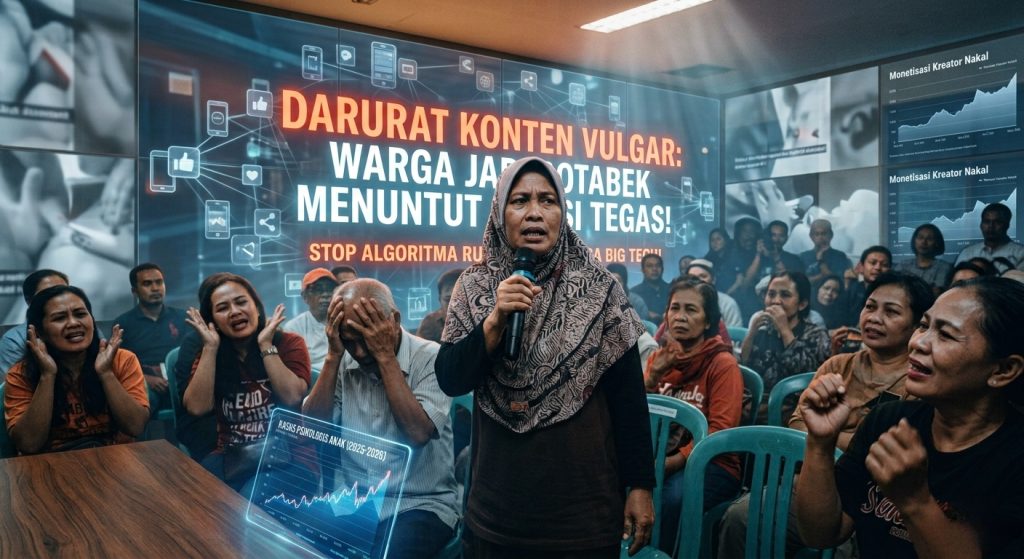
JAKARTA, 𝗯𝗵𝗮𝘆𝗮𝗸𝘀𝗮.𝗻𝗲𝘁– Digital law enforcement and regulatory efficacy in Indonesia are facing a double-edged crisis. Beyond straining to filter a relentless wave of explicit foreign content, the government is now under immense pressure to clamp down on the skyrocketing production of obscene media generated by Indonesian creators themselves. An alliance of parent representatives and education practitioners from Jakarta, Depok, Bogor, Bekasi, and Tangerang (Jadebotabek) has collectively urged the Indonesian government to overhaul cyber regulations. They demand massive financial penalties against foreign Tech Giants that allow their digital ecosystems to turn into cash cows for explicit local content.
Community demands are mounting as field realities show that explicit content in the local language is adopted much faster by school-aged children. According to periodic reports from the Ministry of Health (Kemenkes), the average screen time for minors has hit 7.5 hours per day. Furthermore, data indicates that 34.9% of school-aged teenagers experienced mental health issues over the past year. Sociologists and child psychologists link this phenomenon directly to the heavy consumption of explicit local media. Because these videos use everyday slang, they immediately degrade children’s real-world behavior and speech patterns.
The government previously enacted integrated cyber protections through Government Regulation No. 17 of 2025 on System Operator Governance in Child Protection (PP TUNAS) and Ministry Regulation No. 9 of 2026, which restricts independent account access for minors under 16. The Ministry of Communications and Digital Affairs (Komdigi), led by Minister Meutya Hafid, logged hundreds of thousands of underage accounts penalized during this enforcement period. However, the public argues these measures remain ineffective as long as social media apps offer monetization features or digital “live gifts” that reward explicit local creators.
⚖️ LEGAL REFERENCE BOX: CRIMINAL LIABILITY FOR CREATORS & BIG TECH OBLIGATIONS
- IT Law (Article 27 Paragraph 1 in conjunction with Article 45 Paragraph 1): Imposes up to 6 years in prison and/or a maximum fine of IDR 1 billion for anyone who intentionally distributes electronic information containing indecent or obscene material.
- Pornography Law (Article 4 in conjunction with Article 29): Strictly prohibits producing, manufacturing, duplicating, distributing, or providing pornographic materials, carrying a prison sentence between 6 months to 12 years and fines up to IDR 6 billion.
- PP TUNAS No. 17 of 2025: Mandates Digital Platforms to execute filtering and access termination, holding them fully accountable for protecting minors from harmful or age-inappropriate digital materials.
- Ministry Regulation No. 9 of 2026: Solidifies platform obligations to verify user age, restrict standalone accounts for kids under 16, and enforces progressive administrative penalties and fines for violations.
🏛️ Corporate Accountability and the Legal Noose for Local Creators
Civil society groups are urging the government to adopt a comprehensive “Digital Duty of Care” model. Law enforcement is pushed to move beyond mere account suspensions, focusing instead on aggressive, two-pronged crackdowns:
- Cutting Off Cash Flow (Monetization): The public demands the government force platforms like TikTok, Instagram, and Facebook to permanently block payouts and live gift features for Indonesian creators producing lewd content.
- Fines Based on Global Revenue: Drawing from international frameworks, if a digital platform fails to filter explicit content (whether local or foreign) from children’s feeds while profiting from ads, the government must impose fines scaled to a percentage of the corporation’s annual global revenue.
- Enforcing Deterrent Domestic Sanctions: Outraged citizens want the aggressive tactics previously used against non-compliant platforms—where escalating administrative fines reached tens of millions of rupiah—to be deployed systematically across all short-video apps lagging in local content moderation.
🎙️ Field Report: The Suburban Digital Reality for Children
Based on interviews and field data compiled by the editorial team across several suburban housing hubs in Jadebotabek, parents’ deepest anxieties stem from Indonesian-language content breaking through app filters:
- Jakarta Resident (South Jakarta): “Now it’s our own people making inappropriate content just for clout and gifts. Because it’s in Indonesian, the kids copy the vulgar language immediately. The government needs to hit platforms with massive fines so they hire more content moderators for the Indonesian region.”
- Depok Resident (Margonda): “Basic manners among elementary kids have plummeted. They copy physical pranks and vulgar phrases trending among local influencers. This fight against algorithms won’t end until the government forces apps to permanently kill these toxic accounts.”
- Bogor Resident (Cibinong): “Social media corporations pull massive profits from high viewership in Indonesia. It’s deeply unfair that they let our children’s morals rot just to keep user engagement high on their apps.”
- Bekasi and Tangerang Residents (Tambun & Serpong): “Stronger synergy between law enforcement, child protection agencies, and the ministry is vital to jail explicit creators and fine the tech companies. This is a fundamental child protection issue to ensure kids grow up in a clean digital environment.”
As public backlash intensifies, the government’s political will and leverage are being tested. Without progressive legal adjustments that cut off financial incentives for reckless creators and multinational corporations, Indonesia’s digital space risks causing severe, long-term social costs to the morality of its future generation.
Reporter: Timothy
Editor: bhayaksa.net Editorial Team