
Oplus_131072
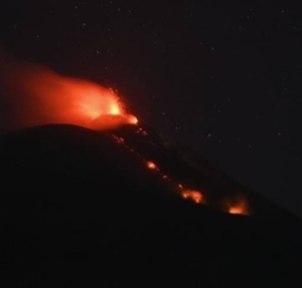
LEMBATA, bhayaksa.net— Volcanic activity at Mount Ile Lewotolok in Lembata Regency, East Nusa Tenggara (NTT) has escalated once again. The active stratovolcano reportedly erupted, accompanied by incandescent lava flows, on Sunday, September 20, 2026, at 6:34 PM WITA.
According to chronological data from the Mount Ile Lewotolok Volcano Observatory (PGA), the eruption triggered a 400-meter flow of scorching incandescent lava, which cascaded from the main crater lip toward the southeastern sector. The eruption also generated a volcanic ash column rising 400 meters above the summit. The ash column appeared white to gray, with moderate to thick intensity, drifting steadily toward the west.
An official statement regarding the eruption was confirmed by Mount Ile Lewotolok PGA Observer, Stanislaus Ara Kian, in a written report released on Sunday, September 20, 2026. “An eruption was observed with an ash column height of 400 meters, emitting white and gray smoke,” Stanislaus explained in the monitoring agency’s official release. He added that as of Sunday night, the volcanic status of Ile Lewotolok remains strictly at Level II (Alert).
The impact of the falling volcanic material has hit residents at the foot of the mountain the hardest, particularly in Jontona Village, East Ile Ape District, Lembata Regency. This series of eruptions has caused severe environmental degradation, threatening green agricultural lands and the survival of thousands of local livestock.
Jontona Village Head, Nikolaus Ake Watun, issued an official statement when contacted by the press on Sunday, September 20, 2026, regarding the distressing conditions facing his community. Nikolaus detailed that thick volcanic ash and sulfur gases have completely ruined green pastures and contaminated the villagers’ communal clean water storage tanks.
“Livestock feed has been heavily contaminated by volcanic ash, sulfur, and toxic gases,” Nikolaus emphasized in his official statement on Sunday (9/20/2026). Due to exposure to these toxins, thousands of livestock owned by the villagers—consisting of cattle, goats, and pigs—have lost their appetite and are experiencing a drastic decline in health. This contamination has caused widespread panic among local farmers, as the grass used as primary feed is now blanketed by sharp, toxic silica dust.
Meanwhile, regarding local relief efforts, the Head of the Lembata Regency Regional Disaster Management Agency (BPBD), Andris Koban, stated that the local government has not yet established centralized evacuation centers or ordered mass evacuations for the villagers. Based on field assessments by the rapid response team, the current flow of incandescent lava is still confined to the designated danger zones and does not pose an immediate threat to residential areas. Nonetheless, BPBD emphasized that their preparedness status remains at the highest level to anticipate any dynamic changes in volcanic behavior.
To prevent casualties from the evolving threat, the Center for Volcanology and Geological Hazard Mitigation (PVMBG) issued strict safety recommendations. Residents of Jontona Village and surrounding areas are strictly prohibited from conducting any activities within a 2-kilometer radius of the volcano’s active crater. Furthermore, the sectoral exclusion zone has been expanded to a 3-kilometer radius toward the southern and southeastern sectors to avoid hazards from sudden lava collapses. Warga who must travel outdoors are highly urged to wear protective masks covering their nose and mouth to prevent Acute Respiratory Infections (ARI) caused by the sharp volcanic ash.
Reporter: Susana Emilia Taebenu
Editor: bhayaksa.net Team