

Oplus_131072
JAKARTA, bhayaksa.net— A sound night’s sleep has officially become a premium luxury for urbanites slammed daily by pollution, tight work deadlines, and non-stop screen time. This chronic exhaustion coupled with an inability to drift off prompted bhayaksa.net reporter Timothy to launch a health investigation, including an in-depth interview with dr. Andi Wijaya, Sp.GK, a leading clinical nutrition specialist in Jakarta on Thursday, September 24, 2026. This expert confirmation aims to break down how natural dietary interventions can significantly cut down sleep onset (the time it takes to transition into sleep) while curbing the alarming public dependency on chemical sleeping pills.
“Urban communities need to stop viewing chemical sleeping aids as a quick, long-term fix for insomnia. Self-medicating with sedatives or hypnotics without strict medical supervision carries a high risk of developing drug tolerance, meaning the body will require ever-increasing doses to achieve the same sedative effect. Over time, this not only strains liver and kidney functions but also shatters the body’s natural sleep architecture, causing patients to suffer from far more severe rebound insomnia once they stop the medication. The safest and most effective solution is to naturally regulate your hormones through macro and micronutrient interventions from daily food choices,” dr. Andi Wijaya stated during the interview at his clinic in Central Jakarta.
He analyzed that sleep disorders are frequently triggered by spikes in cortisol, the body’s primary stress hormone. To counteract this, the system needs neural stimulation from calming chemicals. “Carrier agents such as tryptophan, magnesium, and potassium actively boost serotonin synthesis, which serves as the foundational raw building block for melatonin production—the body’s natural hormone that signals it is time to sleep,” he explained in technical detail.
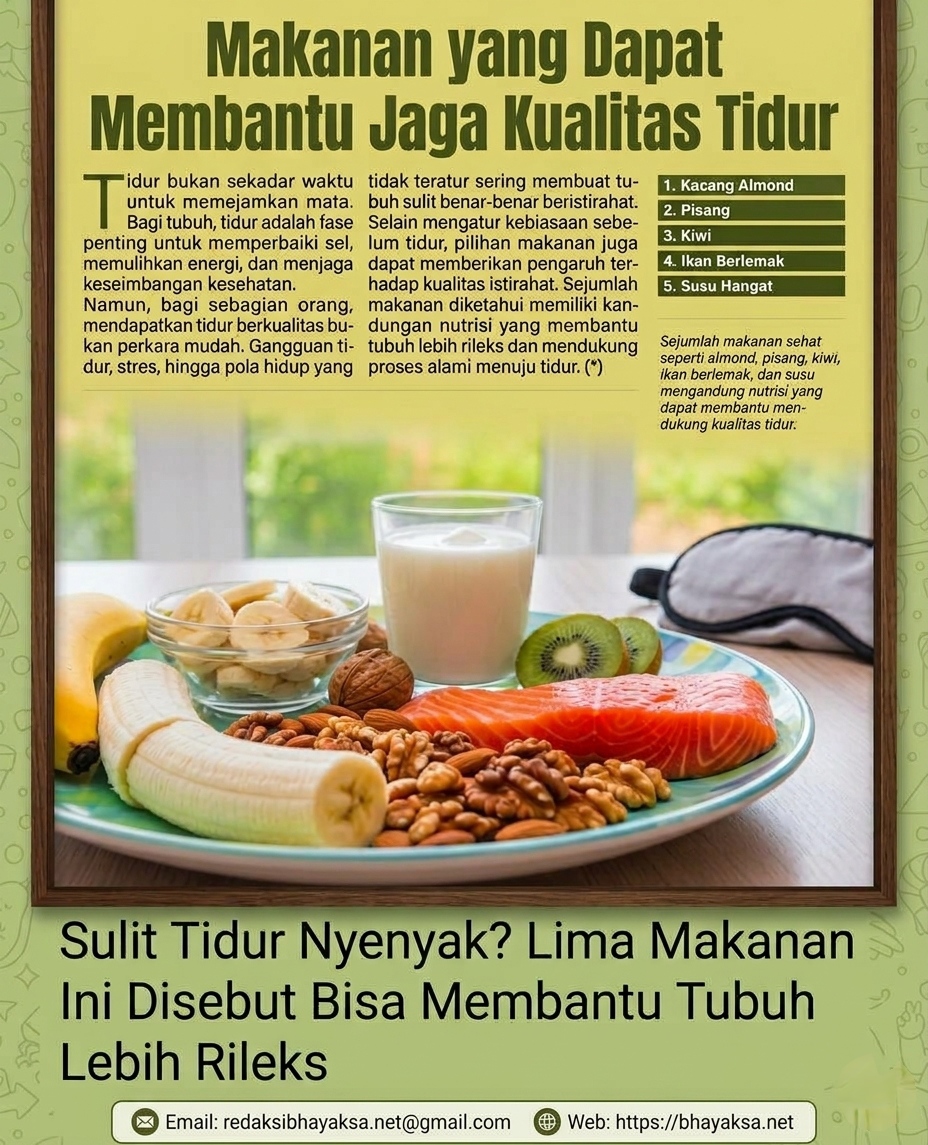
Based on dr. Andi Wijaya’s medical breakdown, here are five types of sleep-inducing foods you should eat at night, along with their ideal daily portion sizes:
- Almonds: Packed with high magnesium content that functions as a natural muscle relaxant.
Ideal Portion: Eat just 1 small handful (about 10-12 kernels) of unsalted roasted almonds, roughly 1 to 2 hours before bed. - Bananas: Rich in a combination of potassium and vitamin B6 to optimize the swift conversion of serotonin.
Ideal Portion: Stick to 1 medium-sized banana as a light late-night snack so your digestive tract does not have to work overnight. - Kiwi Fruit: High in antioxidant density, which works efficiently to reduce systemic inflammation and extend deep sleep phases.
Ideal Portion: Consume 2 fresh kiwis about 1 hour before turning in to secure more stable rest cycles. - Fatty Fish (such as Salmon): A prime source of Omega-3 fatty acids and Vitamin D, both crucial for maintaining a steady biological clock (circadian rhythm).
Ideal Portion: Serve a 3.5 to 5-ounce (100-150 grams) grilled salmon fillet during dinner to stimulate evening serotonin production. - Warm Milk: Contains active calcium and tryptophan, which stimulate the brain to release melatonin into the bloodstream.
Ideal Portion: Drink 1 glass (about 8 fluid ounces) of warm, plain, low-fat milk with no added sugar right before going to bed.
DON’T MISS OUR NEXT EDITION:
Have you tried eating all the foods listed above but still find yourself staring at the ceiling until dawn? Watch out—you might still be practicing in-bed habits that silently destroy your body’s natural calming nerves! The journalistic team at bhayaksa.net, alongside dr. Andi Wijaya, Sp.GK, has gathered a blacklist of the most fatal nighttime habits (sleep hygiene) routinely ignored by urban citizens. Why do specific activities right before bed sabotage your brain all night long? Make sure you don’t miss our upcoming exclusive follow-up edition regarding the bedtime habits urbanites must avoid, only on bhayaksa.net!
About the Expert:
dr. Andi Wijaya, Sp.GK is a medical practitioner and clinical nutrition consultant based in Jakarta. He dedicates his medical career to research in micronutrients, metabolic disorders, and the direct impact of dietary patterns on the neurological and psychological health of modern society.
Reporter: Timothy
Editor: bhayaksa.net Team