
Oplus_131072
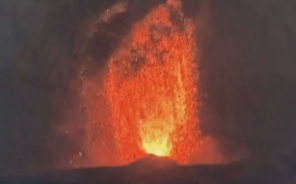
TANGERANG, bhayaksa.net—- Rumbling shockwaves and loud sonic booms that rattled windows across coastal Banten and Tangerang this weekend have been linked to a major geodynamic event in the Sunda Strait [PVMBG 6/9]. Anak Krakatau volcano unleashed a series of powerful eruptions on Sunday, September 6, 2026, spewing massive plumes of volcanic ash tens of thousands of feet into the atmosphere and forcing a sweeping shutdown of commercial flights at Soekarno-Hatta International Airport. [Prakiraan BMKG 6/9, PVMBG 6/9]
As of the latest real-time monitoring update at 9:47 PM WIB, geological authorities are maintaining a strict Level III (Alert) Status for the active volcano [PVMBG 6/9]. Seismogram telemetry shows highly volatile subterranean magmatic energy, with the latest eruption recording a maximum amplitude of 58 millimeters and a tremor duration of 44 seconds [PVMBG 6/9]. This ongoing volcanic activity continues to pose an immediate threat to high-traffic air corridors across western Java and southern Sumatra [Prakiraan BMKG 6/9, PVMBG 6/9].
The cascading logistical impacts, airspace closures, and national emergency responses are detailed below:
1. Ash Plume Dispersion and Air Travel Paralysis
According to the latest Himawari-9 satellite imagery released by the Meteorology, Climatology, and Geophysics Agency (BMKG), high-altitude winds have split the dense silica-rich tephra cloud into two main trajectory corridors:
- Lower Tropospheric Plume (Up to 20,000 feet / 6,000 meters): Moving northeast toward south, drifting directly over Banten, parts of West Java, and the Jakarta metropolitan area.
- Upper Tropospheric Plume (Up to 50.000 feet / 15,000 meters): Spreading southwest toward northwest, enveloping Lampung, Bengkulu, and stretching out over the Indian Ocean.
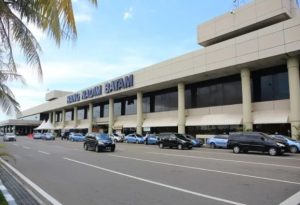
The heavy concentration of abrasive silica particles in the air forced the Ministry of Transportation to ground commercial aviation to ensure public safety. Six regional hubs suspended operations today, including Soekarno-Hatta International Airport (CGK) and Halim Perdanakusuma Airport (HLP) in Jakarta. These emergency groundings caused massive delays and cancellations, leaving tens of thousands of domestic and international travelers stranded.
2. 24/7 Multi-Instrument Tracking and Local Advisories
In response to the escalating volcanic crisis, BMKG confirmed targeted technical measures via its official channels:
“To mitigate the impacts of the ongoing Anak Krakatau eruption, BMKG is maximizing national readiness through an integrated, multi-instrument monitoring framework operating nonstop 24 hours a day. This cross-instrument approach synthesizes data alongside PVMBG-Center for Volcanology to deliver precise, rapid, and accurate analytics. This reinforces inter-agency coordination to back critical decision-making and secure aviation safety as well as coastal areas along the Sunda Strait.”
“BMKG urges the general public, especially those living or working along the coastlines of the Sunda Strait, to increase vigilance while remaining calm. Citizens are advised to carefully screen all incoming information and avoid spreading unverified rumors. For real-time updates, the public should rely exclusively on verified communications released periodically by BMKG, PVMBG, and local government officials.”
This coordinated sensor network yielded a vital confirmation for coastal communities: maritime telemetry stations detected no abnormal sea-level fluctuations along the Sunda Strait. Volcanologists confirmed that the current magmatic eruption does not pose a tsunami threat.
3. Exclusion Zones and Emergency Medical Mobilization
To guarantee public safety, the Center for Volcanology and Geological Hazard Mitigation (PVMBG) enforced a strict 2-mile (3-kilometer) absolute exclusion zone around Anak Krakatau’s active crater [PVMBG 6/9]. Tourists, fishermen, and local residents are banned from entering the perimeter due to the risk of flying incandescent rocks.
Meanwhile, as thin layers of volcanic ash begin to settle over residential areas in Jakarta, Banten, and Lampung, federal agencies have mobilized under orders from President Prabowo Subianto. The National Disaster Management Agency (BNPB) is planning Cloud Seeding Operations (OMC) to trigger heavy rainfall to flush out lingering airborne ash particles from the atmosphere.
Concurrently, Health Minister Budi Gunadi Sadikin advised residents to limit outdoor activities and ordered the immediate distribution of N95 respirators and protective eyewear to frontline clinics [Kemenkes 6/9]. This initiative aims to curb a potential spike in Acute Respiratory Infections (ARI) and severe eye irritation caused by the sharp, microscopic silica dust.
Federal authorities urge internet users to ignore old videos and misinformation circulating on social media. Accurate visual telemetry and real-time volcanic status tracking should be accessed through the official MAGMA Indonesia application.
Reporter: Bryan Zandroto
Editor: bhayaksa.net 𝗧𝗲𝗮𝗺
Primary Source: Bureau of Law, Public Relations, and Cooperation – BMKG